-
What is childhood asthma?
We offer you a complete guide on What is childhood asthma, a disease that is more frequent than is believed and causes respiratory difficulties among other symptoms in children.
What is childhood asthma?
Asthma is a disease that manifests with wheezing, shortness of breath, chest tightness, and coughing due to inflammation and narrowing of the airways.
What are the causes of this disease?
Generally speaking, asthma is caused by inflammation of the airways. To explain it more clearly, during an asthma attack the muscles that surround these passageways become curly and rigid, consequently the linings of the air passages swell, preventing the passage of air easily.
This disease commonly manifests itself in children and is one of the main causes of school absenteeism or recurrent visits of patients of these ages to hospitals.
For example, allergic reactions are key elements in childhood asthma and usually occur together. When children have sensitive airways, the symptoms of this disease can be manifested by inhaling triggering substances also known as allergens. The main triggers of asthma are the following:
- Animal hair or dander
- Dust and pollen
- Aspirin and other medications
- Climate season changes
- Chemicals in the air or food
- Smoke of the tabacco
- Exercise
- Strong emotions
- Virus infections
- Common cold.
What are the symptoms of the disease?
In childhood asthma, a series of problems that affect the respiratory tract are manifested and the most common are the following:
- Difficulty breathing
- Short of breath
- Panting
- Agitation or breathing faster than normal
These kinds of difficulties often become apparent because a child who has trouble breathing tends to swell and pull in the skin on the chest and neck quickly.

Other asthma symptoms include cough, dark circles under the eyes, tiredness, irritability, tightness in the chest, wheezing, or the whistle-like sound when the child exhales air from their lungs.
It should be noted that the symptoms of childhood asthma may vary according to the particular conditions of each patient. It can also manifest frequently or only when there are triggers in the environment and there are children who are more likely to have asthma attacks at night.
How is asthma diagnosed?
In general, the doctor uses a stethoscope to listen to the child’s lungs and in this way perceive the sounds of asthma, however these sounds are usually normal when you are in the middle of an asthma attack.
The main test is for the child to breathe into a device known as a spirometer which can determine the ability of the lungs to exhale air as well. If the airways are narrowed by asthma, then the amount of air decreases.
This is a device that can be kept at home to measure airflow occasionally or when required. Additionally, the doctor may order tests for skin allergies, blood tests, chest X-rays and pulmonary function tests if deemed necessary.
Childhood asthma treatment
This is a chronic disease that is treated with long-term control medications, whose daily use prevents the appearance of symptoms. Among them, the following stand out:
- Inhaled steroids.
- Long-acting bronchodilators.
- Leukotriene inhibitors.
- Disodium cromoglycate.
It’s also a good idea to prevent asthma attacks by avoiding infant exposure to triggers such as pet hair, dust mites, mold, and pollen.
Children who suffer from asthma are instructed by their parents and the treating doctor so that they always carry an inhaler with them and know how to use it correctly at those times when they feel they are about to suffer attacks, in order to prevent them and keep their airways clear.
In any case, the infant’s relatives, teachers and other responsible adults should always be informed so that they are aware of their condition and know how to assist them in a timely manner in case they need it.
-
Asthma is cured?
Asthma is a disease that obstructs the airways of people who suffer from it, making it difficult for them to breathe in and out normally. There are many people who want to know if asthma is curable or if it is a chronic disease that remains with them throughout life. This post is dedicated to answering such an important question, don’t miss it.
What is asthma?
Asthma is a disease where the airways become inflamed and sometimes also produce mucus, which makes breathing difficult and can cause certain symptoms such as coughing, wheezing or shortness of breath.
Many people manage to control their asthma to the point that it becomes a minor annoyance, but in other cases it can prevent them from carrying out their daily activities, especially by causing life-threatening attacks.
Asthma is cured?
Asthma is a disease that has no cure, however, its symptoms can be controlled to guarantee the best quality of life for the patient who suffers from it.
Considering that this disease usually changes over time, it is essential to make frequent visits to the doctor to check the signs and symptoms. What is manifested at the moment and make the necessary adjustments to the treatment to guarantee its effectiveness at all times.
What are the symptoms of asthma?
Although the symptoms of asthma can be different in each person, there are some of them that coincide in most cases.
On some occasions, asthma episodes occur infrequently and the manifestation of symptoms is punctual, such as when exercising. But there are those who usually manifest them at all times. These are:
- Difficulty breathing.
- Chest pain or pressure.
- Wheezing when exhaling.
- Trouble falling asleep due to shortness of breath, cough or difficulty breathing.
- Coughing or wheezing that is aggravated by respiratory viruses such as common colds.

There are also some symptoms that occur when the disease is getting worse, including increasing shortness of breath and the need to use an inhaler for immediate relief.
It is worth mentioning that some people feel that asthma symptoms worsen when they are in certain particular situations, such as when exercising due to inhaling cold and dry air or in certain work areas, when exposed to triggers such as chemical vapors, gases or dust.
Finally, asthma can be allergy induced which is usually caused by airborne particles such as pollen, mold spores, skin residues or dried saliva and pet dander.
When should you go to the doctor?
Although asthma is a controllable disease, severe attacks can be life-threatening. In this sense, it is recommended to consult with the doctor and go quickly when the symptoms worsen and urgent assistance is required, for example:
- When it becomes very difficult to breathe.
- When, despite using the inhaler, no improvement is obtained.
- When you feel short of breath when performing the slightest physical activity.
There are also other circumstances in which consultation with a specialist is recommended, even if asthma has not yet been diagnosed:
- If you suspect that you may be suffering from asthma, because some of the symptoms described above have manifested, such as difficulty breathing, coughing or wheezing.
- To manage the disease after it has been diagnosed so that effective treatment can be determined to help maintain optimal quality of life.
- In case asthma symptoms worsen and especially if the use of the inhaler is not enough to relieve them.
- As a routine check-up to ensure that everything is in order with the treatment or to make any necessary adjustments.
At this point in the reading, it is appropriate to mention that patients suffering from asthma can lead a completely normal life, if they control themselves with the appropriate measures and learn how to act in the event of a possible attack.
-
Essential care for asthmatic children
Fortunately, most children who suffer from asthma manage to control their symptoms until the attacks are really unusual. However, it is essential that both they and their parents know about this disease and the treatments that they require, what are its triggers to avoid and essential care for asthmatic children.
The more they know about the disease, the better the quality of life they can offer the child and their abilities to control it so that they lead a completely normal life. Below we offer a series of indications that will be useful in the care of children suffering from asthma.
Establish an action plan and follow it when necessary
The parents of a child who suffers from asthma must establish an action plan in the event of an attack and the child must be aware of what actions to take in the face of this emergency.
In general, the indications of said plan contain those that have been given by the treating physician, including medications, doses and how to take them, as well as the prevention of triggers how to act before an attack and another recognize it properly and control it in case it appears.
In this way it will be possible to control the episodes or prevent them and they will only have to go to the pediatrician if they really need help.
Provide medications according to the specialist’s prescription
Children with asthma need to take daily medications to keep their airways from growing and others that are only used in the event of an attack to open the airways as quickly as possible.
Most of these medications are administered through a nebulizer or inhaler to get them into the lungs, sometimes they can also be taken in pill or liquid form in any way needed, follow the Doctor’s prescription about dosages and how often you should take them.

Identify triggers and avoid them
The triggers are elements that can affect the airway and eventually cause an asthma attack, among them pollen stands out in the changes in the weather seasons, infections such as common colds, among others, it will be necessary for parents to determine what are the triggers that affect your child particularly and avoid as many as possible. To ensure that attacks are kept to a minimum.
Get the flu shot every year
Given that one of the main triggers of asthma in children is the flu, it is essential that they receive a booster through vaccination against this disease, which is so common, and in this way reduce the chances of becoming infected.
Use devices to ensure the child’s health
It is now possible to predict when a child is about to have an asthma attack by using specialized tools such as a flow meter or even keeping an asthma diary, which will help track symptoms, how often they occur and allow medication to be adjusted to maximize its effectiveness.
The peak flow meter is a handheld device that measures a child’s ability to push air out of their lungs and helps determine when the airways are blocked as a characteristic of seizures.
Identify signs of an attack
When children have already suffered episodes like these before, it is common for it to manifest in certain signs that can be noted by parents as a warning to detect a possible attack Before the symptoms are evident and act in a timely manner by providing the medications that are necessary.
Usually these signs refer to changes in appearance, mood or breathing. Some even simply say they feel a little weird, so it is always appropriate to be aware of children, especially when they are young.
-
Prevent respiratory diseases in children
Children can often develop respiratory diseases that prevent them from carrying out their daily activities normally. In this article, we offer you some recommendations on how to prevent respiratory diseases in children to guarantee their health and well-being.
Respiratory diseases in children
Especially in the winter season, respiratory diseases are on the prowl and children are the most vulnerable to contracting either a simple cold or cough, or even more serious diseases such as pneumonia or bronchitis. It is essential to maintain certain care to ensure their well-being.
How to prevent respiratory diseases in children?
Although in most cases it is inevitable to catch a disease from time to time, there are some measures we can take to reduce the chances of children getting sick and, above all, to prevent these diseases from getting worse.
Keep your vaccinations up to date
All children should keep their vaccination schedule up to date so it is possible to strengthen their defenses and the immune system to reduce the chances of acquiring any respiratory disease, whether it is the flu or something more serious.
Provide them with adequate food
Children, like the rest of the people, obtain their necessary nutrients through the consumption of healthy foods such as fruits and vegetables.
This is especially important during the winter season when it is advisable to include a greater amount of citrus fruits rich in vitamin A and C such as orange or tangerine to avoid colds.
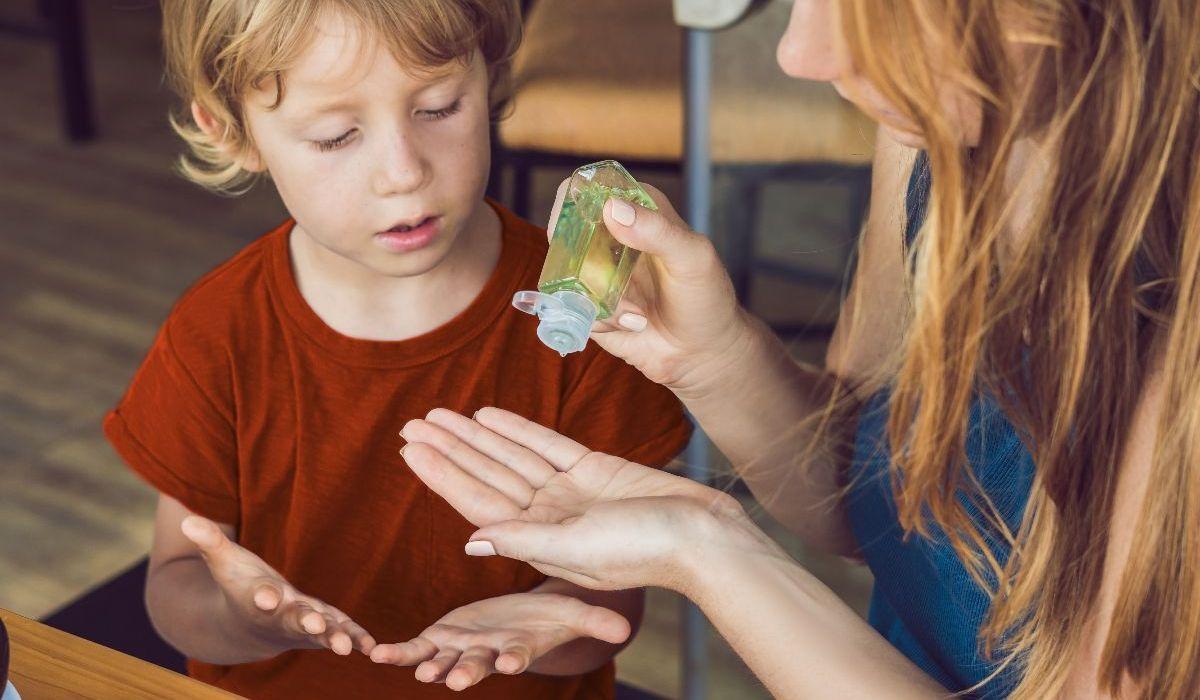
Wash hands frequently
We must teach our children to always keep their hands clean, since they are usually in contact with their own face, mouth, nose and eyes, making them vulnerable to acquiring diseases.
Remember that children often play with dirt and share toys with other children, therefore it is necessary to get them used to washing their hands frequently and especially after playing before eating when they return home or from time to time.
It is not enough to perform a quick handwashing, you must be taught the correct way to do it so that that minute of hygiene can protect you from diseases, germs and bacteria.
Using an antiseptic gel can also be useful in those cases where there is no possibility of washing your hands in the conventional way.
Avoid sharing toys and utensils.
Although it is almost impossible to prevent children from sharing their toys and putting them in their mouths, it is necessary to explain to them that there is a risk associated with contracting diseases, germs, infections and bacteria when carrying out this type of action.
In this sense, it is essential to teach children not to share utensils such as glasses, plates or cutlery with others. And ensure that it is carefully washed after using them.
Wear appropriate clothing and accessories
Although it is true that children love to play in the rain and feel free in the environment when it is cold, it is essential that the adults in charge make sure that they wear the appropriate clothing, including a coat, scarf, cape, hat or everything, whatever is necessary and always carry an umbrella with you in case of unexpected rain.
It is convenient to include among the school supplies, an additional sweater, a raincoat or a small umbrella so that the child is prepared for any circumstance that may occur with the weather.
How to know if your child is sick?
Prevention is the key to prevent children from getting sick, however, we must be able to recognize when children have already gotten sick in order to treat them promptly and prevent them from aggravating
These are some of the signs that you can take into account to act in case you detect any of them.
- Fever above 38.3 degrees Celsius.
- Decreased appetite.
- Drowsiness.
It is well known that children are prone to respiratory diseases, especially if adequate measures are not taken to protect them. Therefore, it is recommended to provide them with vitamin supplements that help them increase their defenses and keep them healthy for most of the time.


